The Future of Gaming Inclusion

A hot topic in 2020 and showing no signs of slowing down is the question on many gamers minds: can we get more inclusive gaming content and a more inclusive gaming atmosphere? When I was peeking my head out for the first time and checking out the vast realm of video and computer gaming, the content was very limited as compared to the plethora of options now available for the digital game seeker. The first game I ever played where you could virtually meet up with your friends was Animal Crossing; a game made up of animal characters and white humanoid ones which the user would play as while you built a house, learned about economics selling fruits and, just had fun fishing and going shopping. Once the game was released on Wii and you could add microphone hardware, you could travel to other towns and you could even visit your friends or strangers you met in online forums if they gave you their “town code.” This opened the door to vast amounts of fun at 13 years old but it also led to some sketchy and even inappropriate situations. From the character choices only being white skinned to the perverted comments from creeps who entered my town, this game was far from inclusive in content or atmosphere for a teenage girl. Unfortunately, we still have these same issues across the board in gaming today.

According to an article written by Jenny Shi with EA Global Analytics, and Insights, more than half of gamers today are dissatisfied with the current standards. In Jenny’s research she aimed to find out what inclusion meant to most gamers and what their thoughts were in terms of inclusion and representation in a survey conducted May 2018 of over 2,000 individuals from age 13 to 54 in the US. For the purpose of her research, Shi defined inclusion as having the option to choose from the spectrum of skin tones for your character, existence of games where stories and plots have culturally diverse characters who take on lead roles as well, appropriate in-game communication and features designed for those with special needs (Arts, 2019). When the results came in, over half of the participants said that “it’s important [to them] that games are inclusive” and about 45% of players said that they would be more likely to play a game that was more diverse.

Sometimes the fewest people scream the loudest and Shi showed that only 7% of the participants said they would be less likely to play a more diverse game, which might come as a surprise to you as it did to me. You might wonder, as I have, why game developers have not conducted more of these types of research surveys and incorporated more diverse characters since it seems a clear majority are on board. That said, most participants said they would agree that representation in game characters is getting better within the industry. One game that came out when I was young that just had a re-make released in the spring that I saw vast improvements for is Final Fantasy VII. At one point in the game you meet a non-binary person and another character has a large role who is possibly trans-gender or bi-sexual. I need to look up the back stories to these characters to know for certain what their sexual orientation is, but I think it’s clear when you play that they are anything but the hetero-norm we usually see in our gaming content. While these characters were in the original one, they were not depicted as clearly as in the new game and you even dance with the bi-sexual character as a way to earn a ticket to carry on your quest within the main story line. Also, in one part of the game you meet a super physically robust, white, gay man and compete against him as way to also move forward in the game.

All in all, I think gaming is going the way of television at this point and the industry will be increasing their diversity of race and sexual orientation. I recently watched two anime shows on Netflix which were made in the US that were very culturally inclusive and had main female lesbian characters: The Dragon Prince and She Ra and the Princess of Power. That said, on the issue of needing more female leads and safer online gaming atmospheres for females and people of color; we need to do far better. 61% of participants rated toxicity while gaming as something they were most concerned about. Toxicity in this report included everything from sexist and racist comments creating a hostile environment during game play to disruptive behavior that soiled the gaming experience for many people.

When asked what barriers would prevent them from enjoying video games in general, 14% said that an “unfriendly player community” would do it and that was the third highest ranked reason why. It makes sense when Shi showed that female players are less likely to engage in online gaming especially playing with strangers or on a team of real players. Not surprisingly, the stats didn’t change much for men over the spectrum. A 25 year old female gamer who took the survey said, ” A lot of strangers had sexual and disparaging remarks when they heard I was a female on voice chat” while a 16 year old player said she was afraid of being harassed or left out.

The numbers came in pretty even for males and females, however, who noted that they would reconsider playing online multiplayer games if disruptive behavior and toxicity were reduced. I would have to agree with them because I also would be more inclined to play online. While my husband often plays online in multiplayer games where there is often frequent chat, he even prefers to turn his chat off at times. As for me, it’s still a hard pass. There is hope for gaming yet however and, as more and more users are demanding change, the supply will meet us with better content and a safer, more user friendly environment for all.
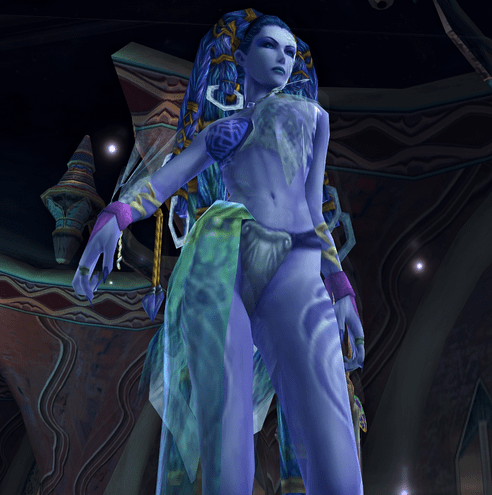
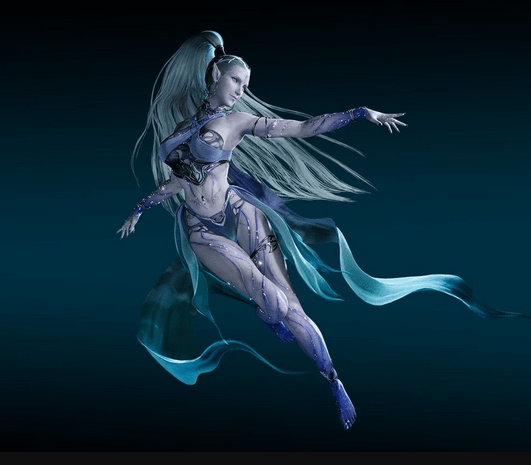
Final Fantasy VII character Shiva who you summon to help you win tough battles has always been sexualized then and now.
Final Fantasy VII character Tifa, a more realistic interpretation of women and not overly sexualized in the game as far as regular ensemble goes.
Aeris, the most modestly dressed female in Final Fantasy VII.
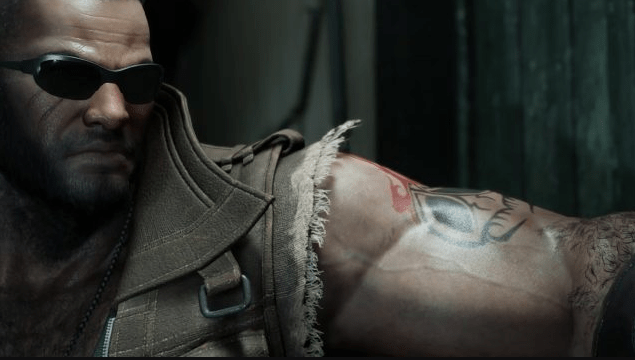
Barret is the toughest man of sound conviction and a part of the main team in FFVII remake and original.
Powerful Asian woman you need on your side in order to win the game in FFVII remake, Madam M.
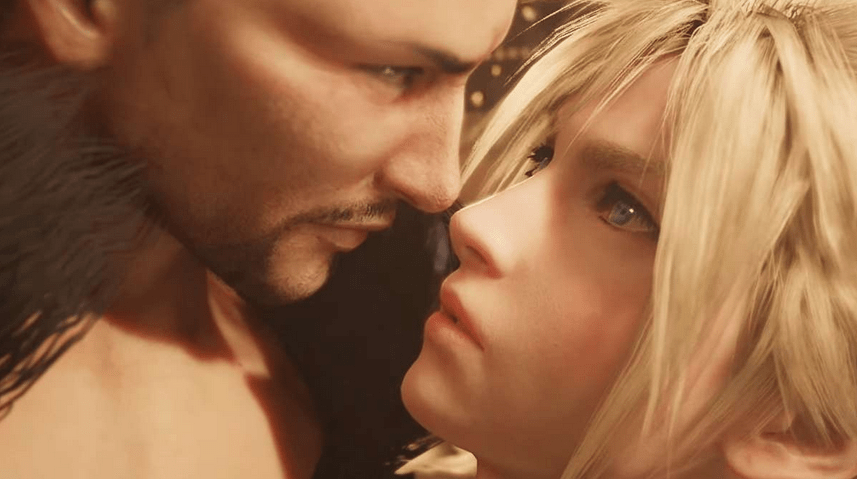
Quite the encounter with main character Cloud (on right) as he has to dress up in feminine attire and dance with who I believe is a possibly trans-gender character, Andrea, on the left. He is a powerful figure head you need to compete in a dance-off with during a side quest.

Citations

Arts, E. (2019, March 7). What Inclusion Means to Players. Retrieved June 15, 2020, from https://medium.com/@Electronic_Arts/what-inclusion-means-to-players-db4522bdd8a0
The Future of the Music Industry

According to Billboard.com and the IFPI Global Music Report for 2020, music revenues have risen for the fifth straight year in a row to an astounding $20 billion in revenue. That said, due to COVID-19 there are many new challenges popping up that may change the outlook for the industry. In 2019, streaming music summed up for over half of the industry’s revenue, making it a first in music history. How is this possible? Well also according to IFPI reporting, there has been a huge increase in subscription services like you see with companies like Spotify, Apple Music and Pandora Radio. I for one have had a Pandora subscription for at least five years and just decided to add Spotify because it allows me to listen to entire albums whereas Pandora kind of picks for you based on similar artists and music to what you search. Billboard noted that “there are now 341 million users of paid streaming services worldwide, up 34% in 2018.”

On the other end of streaming music is downloading songs, which fell about 15% and only accounts for about 5.9% of music revenue across the globe (Smirke, 2020). Most music markets across the world saw boosts in revenue mostly from paid subscription streaming, but the health crisis might impact this year’s numbers. Forbes magazine covered a hard look into the negative impacts the virus has had, particularly on the musicians themselves. I for one was really hoping to be able to see lots of live concerts this year as my husband and I have been doing well financially and the only time I have ever seen a concert live was when I was deployed overseas: Seether and Trace Adkins. Unfortunately, Vibrate, a music data company shared that over 300 festivals have cancelled their shows or postponed to an unknowable date and time. Recording studios are shut down and now musicians have to either find a way to record from home or go without a paycheck. According to Forbes, it’s not just the issue of concerts being cancelled across the nation, but also some of our best musicians have contracted the disease and some have sadly passed on. One such case was “86 year old Afro-jazz legend Manu Dibango (who joined) the ‘gig in the sky’ after contracting COVID-19” ( Lunny, 2020).

Our mother country, not so caring at the moment, doesn’t even have a plan in place for self-employed workers. Now, many musicians are wondering how they will even feed their families and some are beginning to see that they may need to rely on themselves more when and if things open back up and they can return to the studio. With a lack of faith and feelings of uncertainty and job security, I believe the music industry will see some big changes once this virus passes. They’re truly one of many types of organizations whose employees will seek to find alternative routes to ensure they can put food on their families tables come what may and I think we will see more home studios, more streamed concerts and recording studios across the globe will slowly become obsolete or go the way of the film industry’s opulent cinematic theater palaces: age-old relics, neat but no longer useful or practical.

Citations:

Lunny, O. (2020, March 30). The Heartbreaking Cost For Musicians As COVID-19 Stops The Music. Retrieved June 10, 2020, from https://www.forbes.com/sites/oisinlunny/2020/03/24/the-heartbreaking-cost-for-musicians-as-covid-19-stops-the-music/#3b41df6c7a97

Smirke, R. (2020, May 5). IFPI Global Music Report 2020: Music Sales Rise For Fifth Straight Year to $20 Billion. Retrieved June 10, 2020, from https://www.billboard.com/articles/business/9370682/ifpi-global-report-2020-music-sales-paid-streaming-coronavirus-impact

On To The Next

Social media marketing is the hot topic for 2020 and it looks like there needs to be a way to better balance data and customer experience. According to Sprout Social, there are nine social media trends to keep an eye on this year. Marketers are asking themselves the questions of what is successful in social media and what is not. Ranking number one across social media content is the number of likes, then shares, closely followed by customer interaction. The lesser measures of success being revenue attribution, inspiring customers to take action and last but not necessarily least, inspiring emotional response.

As we begin to move away from likes, we see trends gravitate towards something a little more crucial to social marketers; social listening. Rather than riding a short wave of likes, they will be working towards more engagement with customers to better understand what motivates them. Tribes of communities and “third place” social groups have also hit a chord causing markets to consider reaching out to their own platforms as opposed to the entire social landscape. Social Sprout also points out the “emergence of marketing tribes” and the “need for brands to focus on talking to individuals. “

Popular media platform Instagram created a new feature thread where they are now able to share their stories with whomever they choose. Brands have taken this and created a club atmosphere which in turn makes their targeted customers feel special and more open in communication. This seems like a great way to get more detailed feedback from users and I can see the advantages, but they may want to not do this exclusively for the sake of engaging new customers. In addition, marketing strategies address the need for more personalized ads, adding videos and even shipping costs into the ads to eliminate surprise fees and encourage consumers to finish their check outs.

Sellers are also beginning to sell directly on the social platforms which is proving to be more effective than having a consumer follow a link to a bio or website. Also on trend is the idea of social “influencers” to aid in marketing campaigns. Influencers, according to Wired.com, is “shorthand for someone (or something) with the power to affect the buying habits or quantifiable actions of others by uploading some form of original—often sponsored—content to social media platforms like Instagram, YouTube, Snapchat.” These influencers are becoming more scrutinized by companies and are given a more negative context in terms like “fake influencers” or ” nano influencers”. These users pose an issue because their followers are engaged by how many likes something has, which doesn’t necessarily bring in a meaningful audience. One better way to engage with a more productive audience has been growing the past couple of years and this technique is the use of stories on social media.

In stories you can create an interactive way to reach your audience through a mixed timeline of videos and comments sprinkled with polls and music. This type of marketing is growing fast this year as more and more user- generated content is being created. When a user invests in a product they’re encouraged to share and use connective hashtags on their posts so that when a potential new customer is curious they can see and read about others’ experiences with a product or service by simply looking up that hashtag. This type of product evaluation, if you will, is more intimate in that every day people can share to their stories and each person has a real and personal relationship to their viewers who they consider to be friends and family on social media. This is a cheap and effective way for businesses to spread the word and helps to bridge the gap made by influencers who don’t have that type of personal connection to their audience and who do not provide as much feedback.

Many companies upon the emergence of new platforms jumped in to create a presence on them before really considering if all of these were necessarily the most beneficial to their product or even had the best audience. Now, marketers suggest only participating in platforms that best fit your perspective user rather than spreading your product thinly over multiple platforms. This enables sellers to really generate rich, informative, niche content because they aren’t focused on maintaining a presence on so many platforms at once. I myself have been thinking I should remove my Facebook business account and focus solely on Instagram and Pinterest because my audience is larger on these platforms and feel like less of an extra weight that need not be troubled with.

Last but certainly not least are new user friendly tools that are surfacing which make it easier for businesses to track data. For example, Instagram now has the option to open a business account and, after you obtain 100 followers, the more data and reach you can obtain. Some of these tools are reports and charts which show how far a posts reach was and how many visitors a post brought in. Insights like these are broken down into three categories; content, activity and audience. You can even “boost” or promote your post after you have reached a certain amount of followers to increase your overall reach. You can view how many impressions your posts have made, if anyone shared your posts, and view page interactions and profile visits. You can even grain insight into your audience demographic to better help you understand who your preferred audience is.

All in all, social media platforms this year are on trend for becoming even more immersed with marketing and sales. While there’s no sign of these strategies slowing down, it looks like users can anticipate more interactive content and personalized ads from their choices of social media platforms. Sounds like a good deal to me!

Sources:

Barnhart, B. (2020, May 15). The most important social media trends to know for 2020. Retrieved June 9, 2020, from https://sproutsocial.com/insights/social-media-trends/

Influencer Marketing. (2020, May 26). Social Media Trends for 2020 and Beyond. Retrieved June 9, 2020, from https://influencermarketinghub.com/social-media-trends/

Martineau, P. (2019, June 12). The WIRED Guide to Influencers. Retrieved June 9, 2020, from https://www.wired.com/story/what-is-an-influencer/

What About Social Media?

In the 1970s, social media emerges with computer technology in a very different way than what we see today. According to an article by Digital Trends, social media got its start in that hands of the most antisocial of them all: nerds. At the time there was a bulletin board system or BBS, which was easy to communicate through the use of telephone lines and modems. These “nerds” loved to chat it up from their isolated corners of their homes by posting bulletins in response to others nerds about technical babble which undoubtedly would gain them six figure careers in the near future. Even as online forms of communication picked up, “long distance calling rates usually applied to out- of- towners, so many Bulletin Boards were locals-only affairs that in turn spurred local in- person gatherings.”

Fast forward into the ops when the internet really kicks things into gear and you don’t have top deal with horribly slow speeds of the BBS, but instead exchange it for the blaring connectivity of dial up. Back track just a smidge to the 1980s and you may have ventured the avenue of CompuServe, a “business-oriented mainframe computer communication solution” which allowed its users to share files and access the news and events. With these capabilities it offered something completely different as it allowed for real time interaction. Before you would wait long periods of time, but now the replies were nearly instant. Now, back to the 90s and digital up internet; what so be consider to be the true precursor to today’s social media presence.

The three letters that come to my mind as a 90s baby are AOL, or America Online. Here you could create a profile and add a small bio about yourself as well as send emails and search online. Yahoo! was next, then Amazon came into the picture selling books online. Only one website is really attributed to being the first social media platform however, and that website was known as Classmates.com. According to Digital Trends, it ” proved almost immediately that the idea of a virtual reunion was a good one. ” More notably when was SixDegrees.com created by Andrew Weinreich in 1997. It was based around

“the idea that all living things and everything else in the world is six or fewer steps away from each other so that a chain of a ‘friend of a friend’ statements can be made to connect any two people in a maximum of six steps. “

So it was really based on a web of contacts for social networking and the user could invite friends and family they listed to the site. Unfortunately upon the start of the 21st century, their membershipss disappeared with complaints of spam and failing to engage users in an approachable way. Next, you would see the start ups of Friendster, LinkedIn, Myspace and finally, Facebook. Friendster would grow immensely and then plummet from communication and technical issues from the top down and today is only operating as an online gaming platform. LinkedIn is still today, albeit more polished, online business networking social media platform helping professionals to connect.

When I was 13 years old in 2003, I recall the start up of MySpace in all its customizable glory. Oh yes, backgrounds and page songs would change with every day of the week and if you didn’t have a game to play on your page you were SO yesterday. Now my teenage pastime is used mainly by musicians and bands, although I’m not aware that I am a fan of any. Now I want to go peruse the dusty space room that is MySpace just to find what dust bunnies still hop around. Now, he we are with Facebook as our top global social networking source. There are many reasons for its success such add ease of use, simplicity and excellent marketing strategies. Others note that iconic, literally and figuratively, “like” button as an easy way to respond to posts. Other platforms like Twitter would catch on and use it too.

Within the rise of mobile phones, ease of use and a demand for more content and news social platforms would initiate ed green more variations of social media and networking. Now we have Instagram which grew from its photo centric format and connectivity from the use of hashtags. We also have SnapChat which allows its users to send photos and messages which essentially erase themselves after viewing. IG was purchased by FB and SnapChat was accused of violating user privacy in the wake of a new form of social flirting which uh would later be dubbed as “sexting” and open the door to a whole other bag of worms! Tinder and other thirsty dating apps would erupt and change the world of online dating as we knew it.

Today, people now “exist” on multiple platforms, and instead of fighting against this trend, larger companies are also buying bug in to this new realm of marketing possibilities. On the horizon are integrated software combined with enabling hardware for things like augmented reality and even virtual reality. Already we have Oculus Rift and Google Glass to name a few AG and VR tech in use and undergoing development today. Can’t wait to see what is coming next and to learn about the roles they might play in the context of social networking. Next time!

Sources:

Shah, S. (2018, June 20). The History of Social Media. Retrieved June 9, 2020, from https://www.digitaltrends.com/features/the-history-of-social-networking/

Ngak, C. (2014, February 4). Then and now: a history of social networking sites. Retrieved June 9, 2020, from https://www.cbsnews.com/pictures/then-and-now-a-history-of-social-networking-sites/2/

McFadden, C. (2019, July 16). A Chronological History of Social Media. Retrieved June 9, 2020, from https://interestingengineering.com/a-chronological-history-of-social-media

Communication Technology: Social Media

I am interested in social media technology because it seems to be a constant part of our every day lives and, it seems to even have entered the scope of direct to consumer sales in recent years in a way that it never has before. Social media used to be a way to communicate among family and friends, however now as I enter into the world of virtual assistance as a graphic designer, I am realizing just how essential of a role social media will have on my ability to create sales and advertise my services. For example, most successful businesses have an Instagram account to help boost their sales and gain followers who share their posts and help to get their name out there. I want to learn about how all of this came to be and what it means for Instagram to be owned by Facebook. When you create a business account on either social media platform, you will be asked several times if you want to add one or the other, or connect the two accounts. I have found that Instagram is more profitable and I am curious to also learn why that is. Anything I can learn about social media will be interesting from a business stand point because it seems to play a huge role when it comes to having a successful business that thrives or one that lags and ultimately fails because it was unable to keep up with the ever changing consumer demands.

History of Video Games

Here’s a sweet little infographic on the intersting history of video games for you to check out! When I designed this, I had strict criteria to follow and could not have all of the information I would’ve liked but I hope you enjoy and hopefully learn something new like I did! Feel free to drop a comment saying what you liked or didn’t like about the design!

Keep on designing!

Ash

All of the Everything

Hello and welcome reader! My name is Ashley Porter and here is just a little window into “all of the everything” about yours truly.

Born in 1990, I am a fan of all things 90’s kids. We are talking everything from Sailor Moon to Rocket League to Zelda Ocarina of Time and every single Final Fantasy. I’m married to a loving and suportive husband and I am a mother of three furry turds whome I love (more than my family’s desire for me to have actual human babies) and, I am working full time – (not doing what I love YET) – as well as working towards my BFA in Communication Design.

Entering into my 30’s, I have found that I am finally at a place where I know what I want, and that is to be a freelance designer and illustrator. I spent my 20’s learning about myself, dealing with big life changes and challenges and navigated down many different carreer paths. One thing is for certain however, no matter what I did, I always found a way to do something artistic or creative. I would always come full-circle back to my passion, art. Even when I was in the Army National Guard I would often be found doodling tattoo requests from battle buddies, designing the platoon flag, coin or t-shirt or simply sketching away while we hurried up to wait.

As a teacher’s assistant working with special needs kids, I would spend my time coming up with art projects and painting the classroom windows so the kids could enjoy vibrant colors and holiday cheer. When I worked for a short time at the California Conservation Corps training new Corps Members, I most enjoyed creating visual displays and posters, as well as the occasional whiteboard doodle of a pokemon character giving worldly advice…you know, as they do. Any administrative work I took on, still, I would wind up creating flyers, newsletters and more because those I worked with would discover my creative ability. Even in my free time I could be found painting windows around town for the holidays, getting down with some crafting or discovering new aspects of art I enjoy.

Currently, I work for an educational software company where I am basically customer service and technical support to anyone who calls our company with questions regarding our system. It’s not creative, not even close. It does, however, pay the bills and allow me to roll out of bed and work from home with a nice group of people until it’s time to take the leap into my chosen career. I could not ask for a better job right now as I work towards my dream, and with any luck, maybe I’ll redesign their logo for them someday or something. 😉

Recently, I have begun to promote my art and design services on social media and I have to say; the slow-going, fewer than 10 likes per post, could totally get me down if I didn’t know that it’s just part of the process. Right now I am moving forward toward my dream career and learning marketing strategies as I go. As I continue on my educational path I want to bring you along with me. In this blog, I will share what I learn, new insights I gain, mistakes I make along the way and, sweet success that we both can learn and grow from. Everyone starts somewhere and in this blog I’m going to dive into all the hurdles and exciting discoveries I make on my way to becoming a designer and doing what I love for a living!

Thank you for joining me on this journey! See you in the next post!

Ash